AI in Marketing Agencies: Faster Workflows, Smarter Teams, and the Need for Internal Restructuring
The AI Revolution in Marketing Agencies Has Already Begun
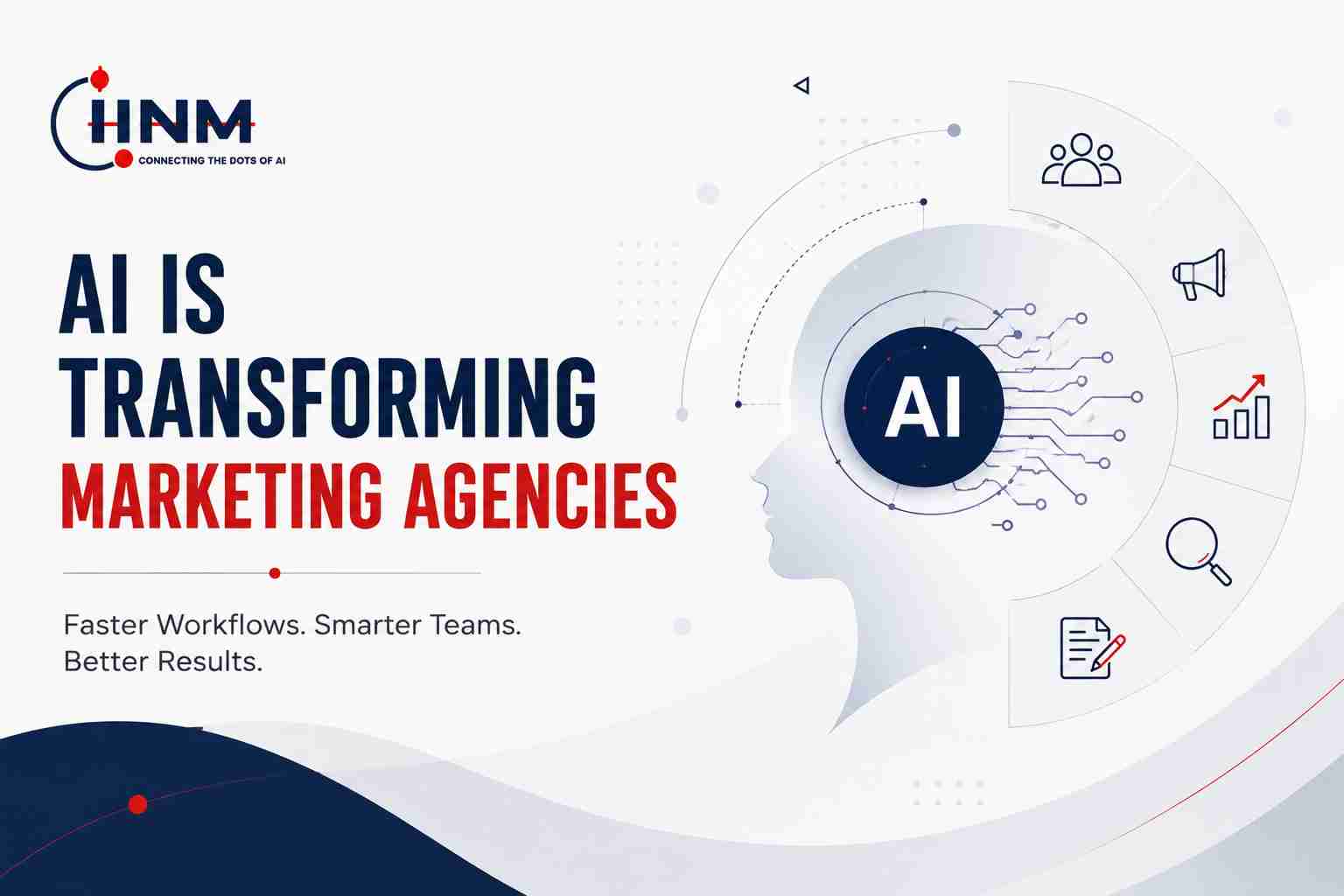
Artificial Intelligence is transforming marketing agencies at an unprecedented pace. From content creation and SEO optimization to campaign management and client reporting, AI tools are helping agencies complete tasks in minutes that previously required hours or even days.
However, simply adopting AI tools is not enough.
The biggest challenge agencies face today is not technology adoption—it is organizational transformation. Agencies that integrate AI into old workflows often create new bottlenecks instead of eliminating them. To unlock AI's full potential, agencies must redesign their internal processes, team structures, approval systems, and service delivery models. (AI News)

Why Marketing Agencies Are Embracing AI
Modern agencies are under pressure to:
Deliver faster results
Manage more clients
Reduce operational costs
Improve campaign performance
Produce content at scale
AI helps agencies achieve these goals by automating repetitive tasks such as:
Content Creation
AI can generate:
Blog outlines
Social media captions
Ad copy
Email campaigns
Video scripts
within minutes instead of hours.
SEO & AEO Optimization
AI-powered platforms help marketers:
Discover keywords
Build topical authority
Optimize content structure
Generate schema markup
Improve Answer Engine Optimization (AEO)
for search engines and AI assistants alike. (WriteRush)
Campaign Analysis
AI tools can analyze large amounts of marketing data and identify:
High-performing campaigns
Audience behavior patterns
Budget optimization opportunities
Conversion bottlenecks
much faster than manual analysis. (Aprimo)
Faster Workflows Don't Automatically Mean Better Agencies
Many agencies assume that purchasing AI software will instantly increase productivity.
Reality is more complex.
When content generation becomes 10x faster, other stages of the workflow suddenly become the new bottlenecks:
Client approvals
Compliance reviews
Brand consistency checks
Creative direction
Quality assurance
Asset management
As a result, agencies often discover that production is no longer the slowest step—the review process is. (AI News)
The Hidden Problem: AI Workflow Bottlenecks
Imagine an agency that previously produced 20 content pieces per week.
After implementing AI, the same team can generate 200 pieces.
But can they:
Review 200 pieces?
Fact-check 200 pieces?
Approve 200 pieces?
Publish 200 pieces?
Usually not.
This creates what experts call an "AI bottleneck shift"—where productivity gains in one area expose weaknesses elsewhere in the organization. (AI News)
Why Agencies Must Restructure Internally
The future agency will look very different from the traditional agency model.
Instead of large teams focused on execution, agencies will increasingly focus on:
Strategic Planning
Human experts will spend more time on:
Brand positioning
Marketing strategy
Customer psychology
Creative direction
while AI handles repetitive production tasks.
AI Operations Teams
Many agencies are creating dedicated AI operations roles responsible for:
Prompt engineering
Workflow automation
AI governance
Quality control
Tool integration
These roles ensure that AI delivers consistent and reliable results. (TechRadar)
Cross-Functional Collaboration
Successful AI adoption requires collaboration between:
Marketing teams
Designers
Developers
Data analysts
Operations managers
AI works best when integrated across the entire organization rather than isolated within a single department. (The Wall Street Journal)
The Rise of AI Agentic Workflows
One of the most significant developments in marketing is the emergence of AI agents.
Unlike traditional automation, AI agents can:
Analyze data
Make decisions
Execute tasks
Optimize outcomes
with minimal human intervention.
For example, an AI marketing agent can:
Analyze campaign performance
Identify underperforming ads
Adjust budgets automatically
Generate new creative variations
Launch updated campaigns
without waiting for manual approval at every step. (The Smarketers)
Human Creativity Becomes More Valuable
As AI-generated content becomes increasingly common, differentiation becomes harder.
When every agency has access to the same AI tools, competitive advantage shifts toward:
Original ideas
Brand storytelling
Emotional connection
Customer insight
Strategic thinking
The agencies that win in the AI era will not be the ones generating the most content—they will be the ones creating the most meaningful content. (Business Insider)
Best Practices for Agencies Implementing AI
1. Redesign Workflows First
Do not simply add AI to existing processes.
Rebuild workflows around AI capabilities.
2. Create AI Governance Policies
Define:
Review procedures
Brand guidelines
Fact-checking standards
Data security protocols
3. Train Your Team
Invest in:
Prompt engineering
AI literacy
Workflow automation
Data analysis
4. Focus on Strategy
Let AI handle repetitive tasks while humans focus on creativity and decision-making.
5. Build AI-Native Operations
Treat AI as infrastructure, not just another software tool. (TechRadar)
The Future of AI-Powered Marketing Agencies
The next generation of marketing agencies will be smaller, faster, and significantly more efficient.
AI will continue to automate:
Content production
Reporting
Campaign optimization
Customer segmentation
Market research
But success will depend on something technology alone cannot provide:
Human strategy, creativity, leadership, and customer understanding.
The agencies that restructure their internal operations today will be the market leaders tomorrow. Those that simply adopt AI without transforming their workflows risk creating faster chaos instead of faster growth. (AI News)
SEO Meta Title
AI in Marketing Agencies: Faster Workflows Require Smarter Internal Restructuring
Meta Description
Discover how AI is transforming marketing agencies, accelerating workflows, improving productivity, and why agencies must restructure internally to unlock AI's full potential in 2026.
Focus Keywords
AI in Marketing Agencies
AI Marketing Automation
AI Workflow Optimization
Marketing Agency AI Tools
AI-Powered Marketing
AI Agentic Workflows
Marketing Agency Transformation
AI and Digital Marketing
Future of Marketing Agencies
AI Operations Management
AEO Optimized FAQ
How is AI changing marketing agencies?
AI helps agencies automate content creation, campaign management, reporting, SEO, and customer analysis, enabling faster service delivery and improved efficiency.
Why do agencies need restructuring after adopting AI?
AI speeds up production, but old approval and review systems become bottlenecks. Agencies must redesign workflows to maximize AI benefits.
What are AI agentic workflows?
AI agentic workflows use autonomous AI systems that can analyze data, make decisions, and execute marketing tasks with minimal human involvement.
Will AI replace marketing agencies?
No. AI will automate repetitive tasks, but human creativity, strategic thinking, and customer insights remain essential for successful marketing.
What skills will marketers need in the AI era?
Marketers will need expertise in AI tools, prompt engineering, automation workflows, data analysis, creativity, branding, and strategic planning.
